

陈雅蓉:《中国与联合国教科文组织(1945—1971)》
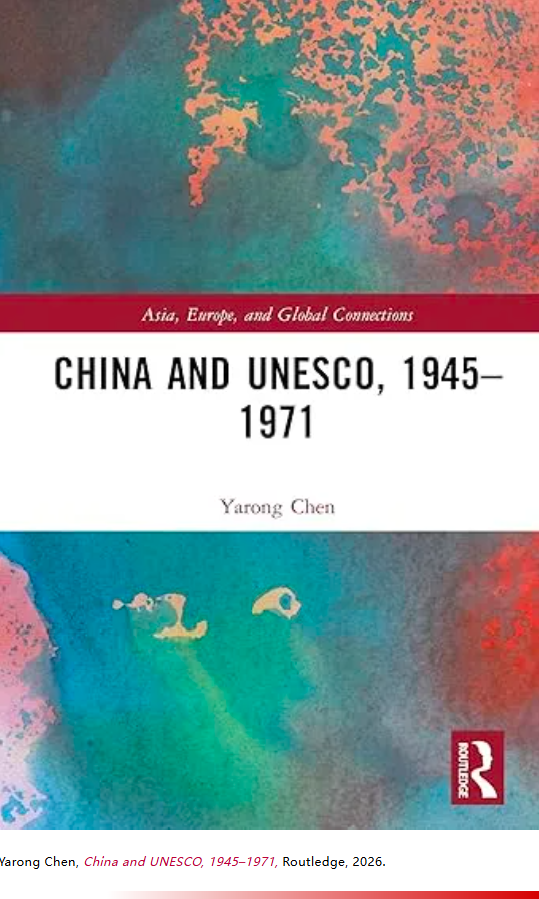
内容简介
本书聚焦于1945—1971年这一常被忽视的历史时期,深入剖析联合国教科文组织与中国之间的互动历程。时间跨度自教科文组织成立起,至中华人民共和国恢复在联合国的合法席位止。全书通过梳理教育、科学、文化三大领域的交流实践,揭示了这段关系的多维度动态。研究不仅展现了中国在战后世界秩序中的复杂角色,也呈现了中国在这段动荡岁月里如何认知并实践其国际参与。
通过考察教科文组织在中国内战与冷战期间的存在,本书展现了由该组织推动的科学外交与文化外交所蕴含的张力、困境及其历史遗产。同时,研究填补了当前教科文组织叙事与中国外交叙事中一些“失落的环节”,为理解中国当下及未来与该组织乃至更广阔世界的互动提供了必要的历史脉络。
本书适合研究现代中国、两岸关系、东亚研究、科学史、冷战史、外交史、国际史、跨国史与全球史等领域的学者与学生阅读,尤其为通过国际组织视角观察相关议题提供了重要参考。
This book analyses the historical interactions between UNESCO and China during the often-neglected period of 1945–1971.
Spans UNESCO’s inception up to the year the People’s Republic of China (PRC) regained the official Chinese seat at the United Nations, the book uncovers the multifaceted dynamics of this relationship by mapping out interactions in three major aspects: education, science, and culture. It sheds light on China’s complex role in the postwar world order, demonstrating how the nation perceived and practiced its international role during this tumultuous period. By examining UNESCO’s presence during the Chinese Civil War and Cold War, the tensions, difficulties, and legacies of science diplomacy and cultural diplomacy facilitated by the organization are revealed. The book also maps out some “lost links” in the current narratives of both UNESCO and China’s diplomacy, providing the historical trajectory necessary for understanding China’s current and future engagement with the organization and the broader world.
This book will be of interest to scholars and students specializing in modern China, Cross-Strait Relations, East Asia Studies, the history of science, Cold War history, diplomatic history, international history, transnational history, and global history, particularly through the lens of international organizations.